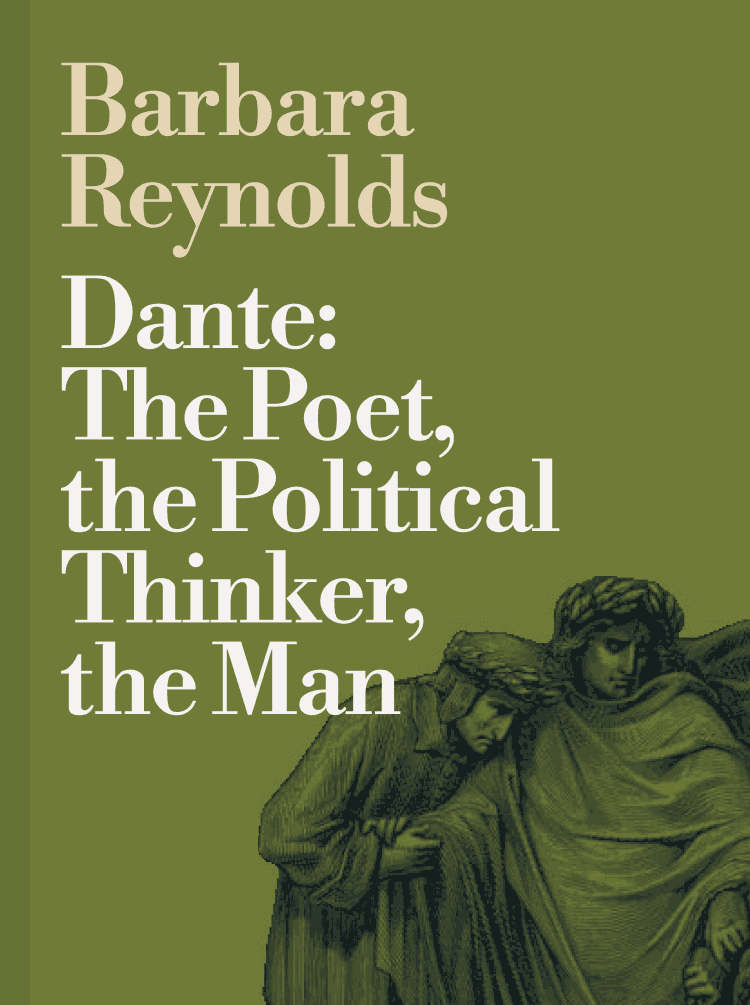
What do we really know about Dante Alighieri beyond The Divine Comedy?Barbara Reynolds’ book Dante: The Poet, the Political Thinker, the Man opens a window into his life—not just as a writer, but as a person navigating his times.
Here are some of the most fascinating takeaways:
A Roman at Heart: Dante believed his family descended from ancient Roman founders of Florence. This wasn’t just vanity—it shaped how he saw his place in history, his politics, and even his poetry.
A Master of Language: Dante was obsessed with words—not just writing beautifully, but writing with purpose.
- He wrote La Vita Nuova for poets.
- He wrote De Vulgari Eloquentia in Latin for scholars.
- And Il Convivio in Italian for everyday people.
He thought poetry was untranslatable—the music of the words would always get lost. That’s why he championed the Italian language, turning it into literature’s new standard.
The Universe as a Map of Meaning: For Dante, astronomy, philosophy, and theology were all connected. He believed the cosmos reflected divine order, and his writings mirror that. In Il Convivio, he linked the stars and planets to sciences, virtues, and spiritual growth—an allegory of life itself.
Lucia: More than a Saint: Saint Lucy isn’t just a character in Dante’s work—she represents “illuminated grace” and even philosophy itself, rescuing the lost and guiding them back to the right path. In Reynolds’ view, Lucia symbolizes the intellect’s power to heal and lead.
His Teachers Aristotle, Virgil, Cicero, Boethius: Dante didn’t just read these thinkers—he lived their ideas.
- Aristotle was “the master of those who know.”
- Virgil was his poetic guide.
- Boethius taught him about fate and virtue.
- Cicero showed him the importance of clarity and moral duty.
A Dream of Universal Peace: Dante wanted the world ruled by a just emperor—someone to unite humanity and keep peace. At first, he thought Rome’s power came from military force. But later, through reading Virgil and Livy, he believed it was divinely chosen to lead mankind.
Life, Virtue, and the Human Journey
Dante believed turning away from reason was like choosing death. In his Commedia, the “dark wood” symbolizes being lost in sin, while the three beasts—lust, pride, and greed—represent the wrong paths in life.
For Dante, nobility wasn’t about bloodlines; it was about virtue, a gift from God.
He also saw life as a journey through four stages: adolescence, youth, old age, and decline. He valued the youthful awe (stupore) that sparks the desire to learn.
Stories that Shaped the Commedia: Dante was inspired by classical tales and Christian visions of the afterlife, like Saint Paul’s supposed journey to the underworld. He fused these with chivalric legends—imagine Virgil as the wise mentor, Dante as the knight, and Beatrice as the guiding lady.
This mix of classical, Christian, and medieval storytelling was revolutionary. It’s why Dante’s work isn’t just a poem—it’s a whole new genre, rich with layers of meaning.
Why Read Reynolds’ Dante?
Barbara Reynolds paints a vivid portrait of Dante as more than a poet. He was a thinker, a political exile, a philosopher, and—most of all—a man trying to make sense of the universe, just like the rest of us.
By the time you finish her book, you won’t just know Dante better—you’ll understand why he still matters today.
