In every game of the 2026 World Cup, around the twenty-second minute, the referee blows the whistle, and the match pauses. Invariably, a team that has spent minutes building pressure sees the moment dissolve. The score is unchanged, but the story has been reset.
This is the first major competition to write that pause into every match, regardless of the weather. The forty-five-minute half, football’s one unbroken stretch, is split in two. With the interval, the game now has four parts. France’s coach Deschamps called it four quarters—for a summer, football takes the shape of basketball.
Not for the players
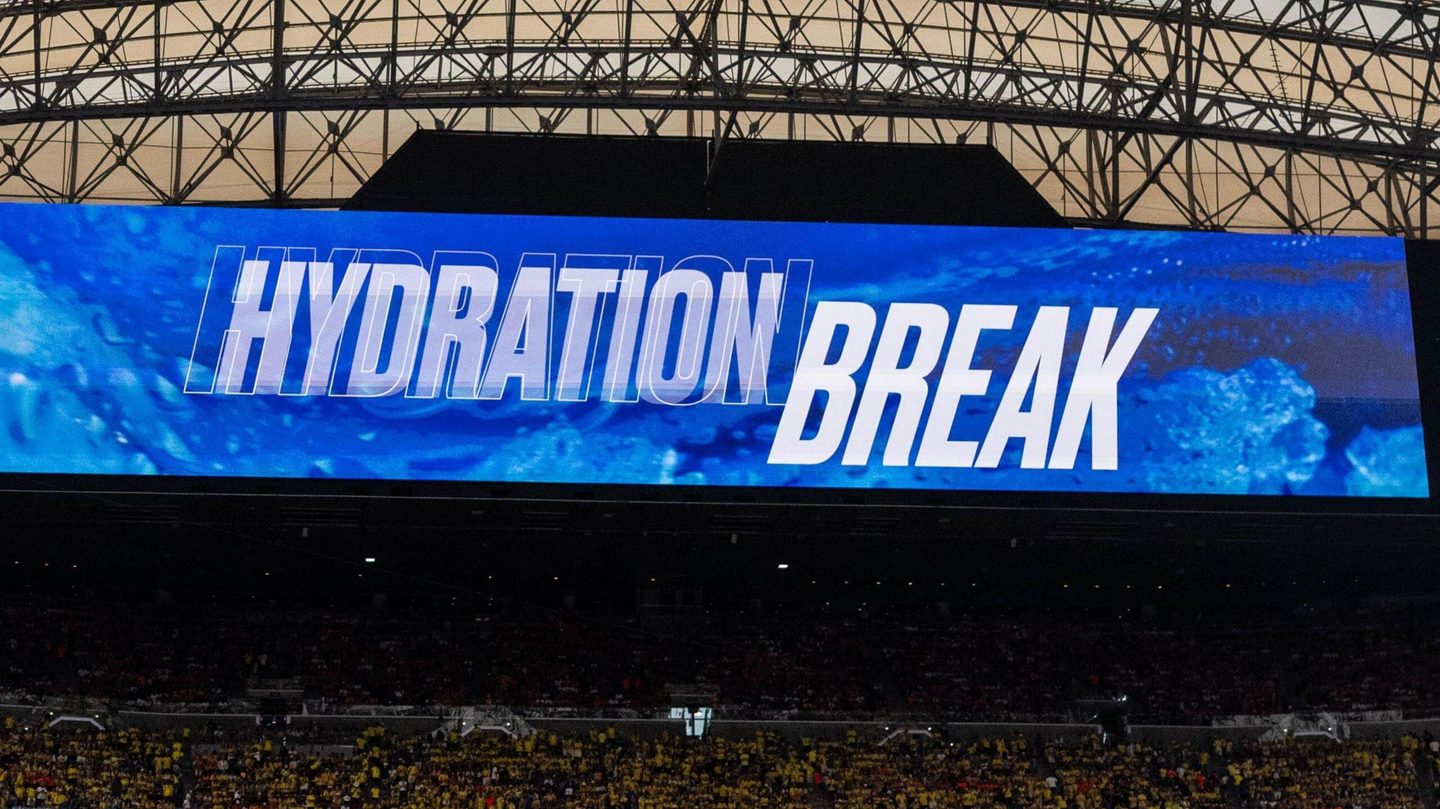
The official reason is heat, and in the worst venues, it’s real. But a thirsty player has always been able to drink. There are many bottles along the boards, behind the goals, and a few strides away at any dead ball. Two halves with no formal water break is not a hardship; it is simply the game, played that way for more than a century. What the rule creates is not access but a block of stopped time, and it is being used in plain view as a coaching window, as Belgium’s coach noted recently. Huddles come from other sports that stop; football keeps the manager on the edge on purpose.
Not for the crowd either
It is not built for the crowd either. Anyone who fills stadiums knows that three minutes buys you nothing—not a toilet break, not a beer from a bar mobbed by thousands wanting the same in the same narrow window. Halftime runs fifteen, and this is one of the reasons for it. A pause too short to leave your seat was never meant for the people sitting in them.
Only for the broadcast
The ‘hydration break’ persists without truly benefiting the players or the crowd, whether during a midday game in L.A. or a cool evening in Toronto. Aside from athletes and fans, only a single entity benefits from these highly valuable minutes, scheduled and sold in advance.
The breaks arrived as a response to the American heat, but I wonder whether they are there only to satisfy American stakeholders. Infantino, FIFA’s president already replied to the theory saying that they are not making any new money from these interruptions but I don’t buy it.
As a great Brazilian writer once said, “In football, the blindest person is the one who only sees the ball.”
