
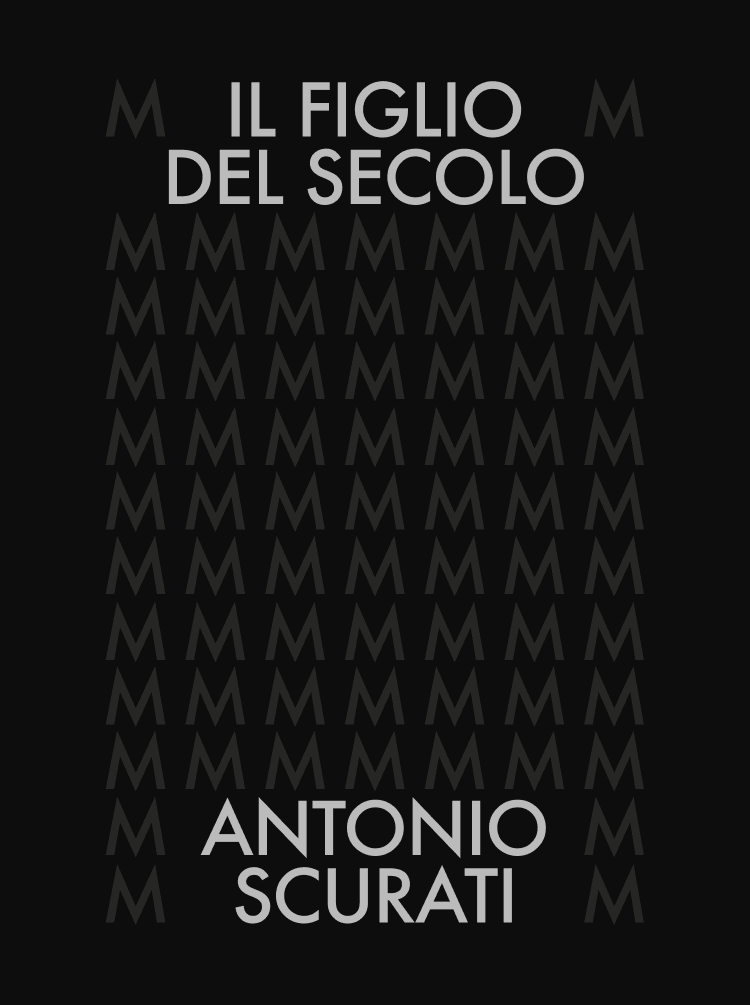
Some books are more than just historical accounts—they are warnings. M. L’uomo della Provvidenza by Antonio Scurati is one such book. It drags us deep into the suffocating atmosphere of Mussolini’s Italy, where obedience was a sacred commandment, and the state sought to control not just politics, but the very essence of being Italian. Reading it today, with global politics tilting ominously toward authoritarian tendencies, is both fascinating and unsettling.
Mussolini’s Vision of Fascism: A Religion of Obedience
Il Duce (from Dux, Latin for “leader”) didn’t just want to lead Italy—he wanted to mold it into his own image. He declared fascism to be a religion, one with a single, sacred command: obbedire! To obey was not just expected; it was exalted. Mussolini saw politics not as a science, but as an art of immediate divination, where intuition, instinct, and force reigned supreme. Those who followed him were not thinkers but ‘tireless sled dogs’, running endlessly toward a vision only he could see.
Even philosopher Benedetto Croce, who had once voted with the Fascists, ultimately admitted the truth: intelligence and fascism were fundamentally incompatible. The movement didn’t need thinkers—it needed action. As Mussolini bluntly put it, “Let’s be frank: I prefer the squadrista who acts over the impotent academic”.

Totalitarian Control: Dismantling Democracy Piece by Piece
Mussolini’s ambitions went far beyond mere governance—he wanted to fascistizzare the entire nation. He envisioned a new Italian, molded in the image of the Renaissance man, but stripped of any liberal or democratic values. The ideal citizen would be fearless, industrious, and utterly devoted to the regime.
This fascistization was to infiltrate every aspect of life: government offices, universities, courts, diplomacy, sports, and even the military. The goal? To ensure that at every level, from the general to the lowliest officer, the camicia nera (Blackshirt) ruled with unwavering loyalty to Mussolini. The school system, public administration, press, and even the judiciary were all forced into alignment. As one nationalist writer put it in 1926: “Fascism wants the death of its enemies.”

Reproduction as Revolution: Mussolini’s Obsession with Birthrates
To secure Italy’s future, Mussolini believed he needed to reverse what he saw as the decay of modern urban life. The birth rate had fallen from 35 to 27 per thousand in just two generations, a crisis he viewed as a symptom of moral and national decline.
His solution? Policies aimed at forcing Italians to reproduce. He imposed a tassa sui celibi (tax on bachelors) to fund the Opera Nazionale Maternità e Infanzia and even considered taxing childless marriages. For Mussolini, sterility and suicide were signs of weakness—traits incompatible with the nuovo italiano he sought to create. Without a demographic surge, he warned, Italy was doomed to decadenza.

The Cult of Mussolini: A Nation Bowing to One Man’s Will
For Mussolini, democracy was a sham. He didn’t need elections—he needed a plebiscito that would confirm, in a deafening roar, the people’s acceptance of his absolute rule. He saw himself as Italy’s indispensable leader, declaring in 1927 that his successor has not yet been born.
In his eyes, the masses were not rational individuals but a moltitudine femmina—a feminine, emotional entity that needed to be seduced, dominated, and guided. Crowds did not think; they surrendered.

Propaganda and the Media: The ‘Most Free’ Press in the World
One of the most chilling aspects of Mussolini’s rule was his mastery of propaganda. He summoned newspaper editors to Palazzo Chigi to explain that, contrary to appearances, Italy’s press was not oppressed—it was the most free in the world, precisely because it served the regime. Unlike in other countries, where newspapers engaged in the crude commerce of sensationalized news, Italian journalism was noble because it had a mission: to glorify the state.

The Vatican and Fascism: The Compromise of Principles
Mussolini’s greatest diplomatic achievement was the Patti Lateranensi (Lateran Pacts), signed in 1929. These agreements ended decades of conflict between the Catholic Church and the Italian state by recognizing the Vatican as an independent entity and making Catholicism the official religion of Italy.
In return, the Pope renounced any political role, bishops swore loyalty to the King, and the Church gained financial compensation for lost territories. The union of trono e altare (throne and altar) created an illusion of divine legitimacy for the Fascist regime. Pope Pius XI even praised Mussolini as l’uomo della Provvidenza—a chilling endorsement that solidified Il Duce’s grip on power.
Why This Book Feels Alarmingly Relevant Today
Reading M. L’uomo della Provvidenza in today’s political climate is like staring into a dark mirror. Mussolini’s playbook—cultivating mass obedience, dismantling democratic institutions, manipulating the press, and forging alliances with powerful conservative institutions—feels eerily familiar.
The past may not repeat itself exactly, but it rhymes. Mussolini’s rhetoric of a “lotta aristocratica” (aristocratic struggle) over democracy, his contempt for intellectuals, and his view of politics as the domain of the strong, not the just, find echoes in modern leaders who undermine institutions in the name of national rebirth.
Antonio Scurati’s work is more than a biography—it’s a warning wrapped in history. It reminds us that fascism doesn’t arrive with jackboots overnight; it seeps in through institutions, rhetoric, and the slow erosion of dissent. Mussolini’s Italy was a nation where freedom was redefined as obedience, where journalists proclaimed themselves freer under dictatorship, and where the Church traded political silence for privileges.
History’s greatest lesson? Never assume it can’t happen again.
