
Last October, I submitted a pull request on the Gutenberg repository on GitHub with an idea: what if WordPress had a tritone filter, similar to the existing duotone tool, but with three color stops instead of two? Allowing our users to define values for shadow, midtone, and highlight would offer much more control and creative possibilities for our tool.
In WordPress development, an idea transformed into an outline with additional details and samples is called a Feature Request — a formal way to propose something new to the project. Once it’s open, it joins a queue. Core contributors and maintainers review, label, and discuss it. Whether it moves forward depends on someone’s time and interest to develop it. For ideas that don’t fit neatly into an existing roadmap item, the wait can last from weeks to months with no clear resolution. Mine stayed there for six months.
Not because the idea was necessarily bad, but because turning a design proposal into a working implementation requires developer time, and developer time is always limited.
Last week, I decided to expand it using Claude Code — Anthropic’s AI coding tool that works directly inside your terminal and your files. I’m a designer who can read code well enough to follow what’s happening, but I don’t write it. Maybe Claude would help me exactly with that, I first guessed.
I described my desired effect clearly: it should mimic duotone, work with specific blocks in the WP Editor, support three color stops, integrate theme presets, and offer a live preview during editing.
Surprisingly, after a focused session, I had a working plugin.
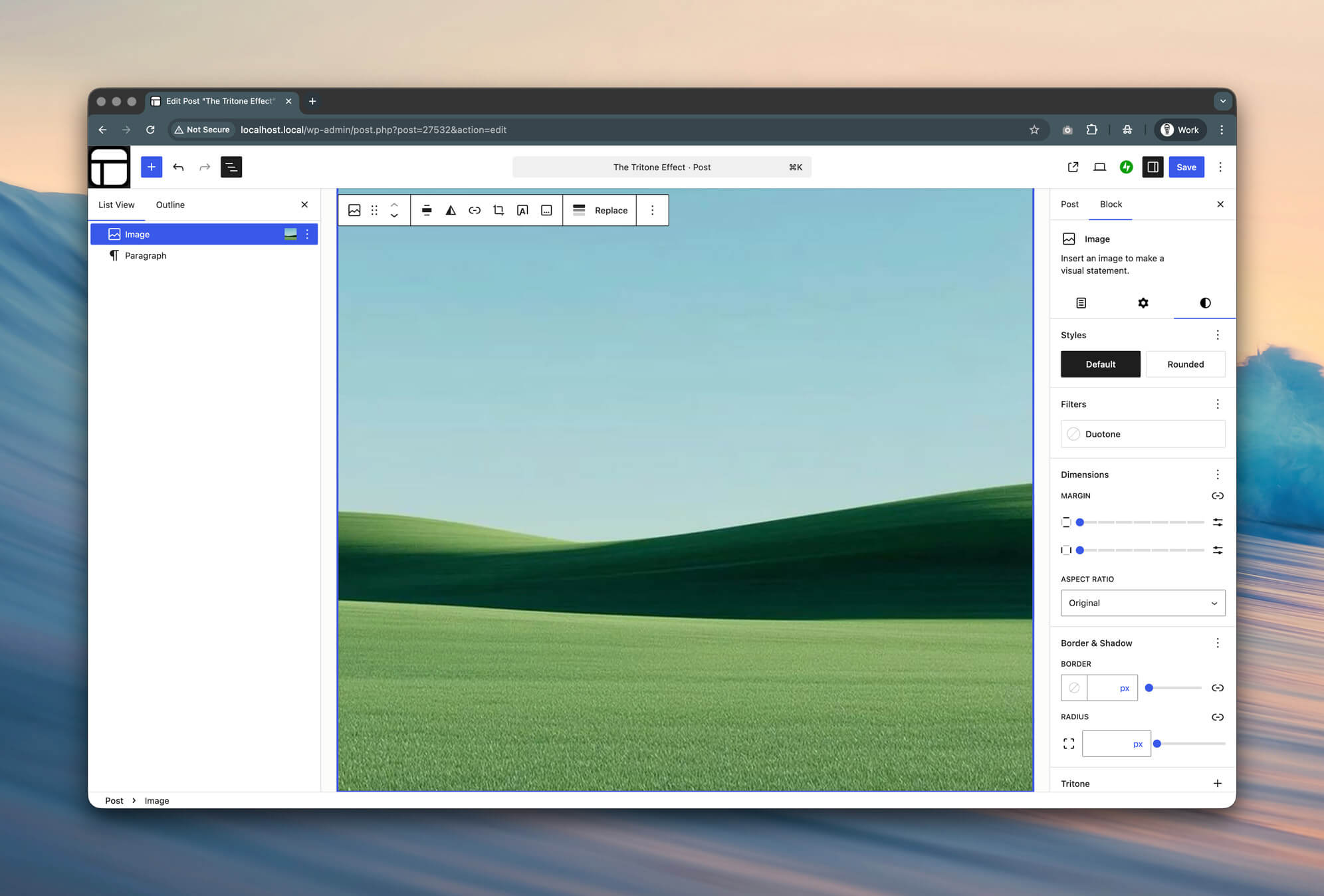
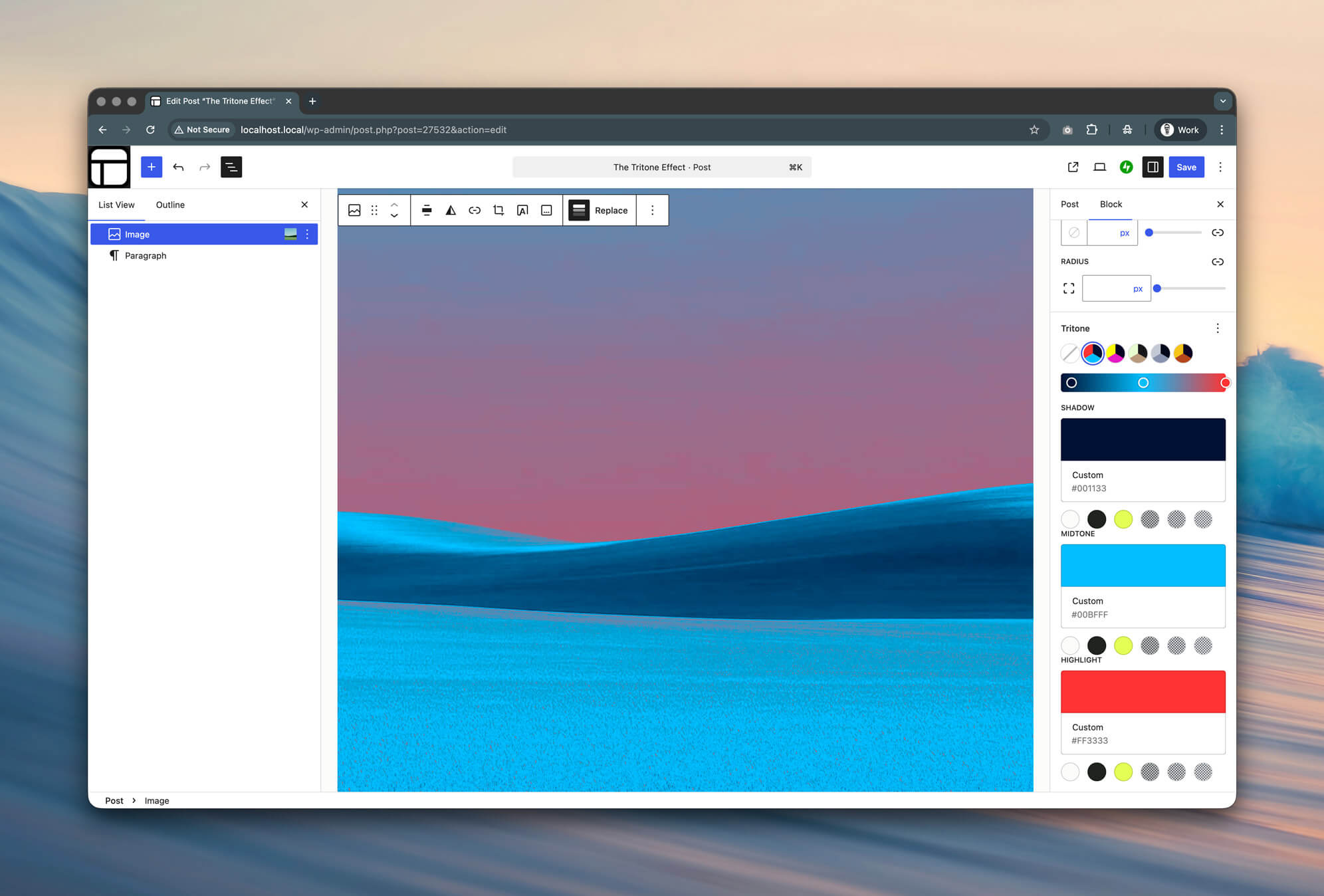
What stood out to me most wasn’t the speed but how the process was like talking to a developer. A shared screenshot, an explanation that something seems off (but my limited vocabulary can’t detail why), and the joy of watching someone figure out exactly what you were looking for. When I asked to move a UI panel from one tab to another, Claude traced a React context issue that could have taken a developer hours to fix. When I pointed out that color swatches weren’t rendering as perfect circles, I found the exact CSS property causing the clipping.
I felt that the back-and-forth was what made it work. Not automation, but responsiveness.
Is the result production-ready? No, and Claude clearly pointed that out, highlighting what a developer reviewing the code would want to fix. But that’s the purpose of a proof of concept. The idea that a simple PR now results in a working demo and a list of specific questions for an actual developer is a different kind of starting point.
I keep thinking about how this impacts the design process in a practical way: there’s a stage between having an idea and being able to promote it that used to take more of other people’s time. That stage is getting shorter now, and it’s up to us designers to learn how to maximize it.
