
I have been sent off exactly once in my life. Sunday football, an elbow strike that I never threw, a referee who thought he had seen something and didn’t hesitate. I complained a lot, but then I walked away. Because that is the entire deal. The card is not an argument. It is actually the end of the argument.
This week, after a sad episode at the World Cup, we were reminded of the importance of such a rule.
An Invention Against Ambiguity
In 1966, during a quarterfinal clash, England and Argentina battled until the moment the referee sent off Argentina’s captain, Antonio Rattín, who refused to leave the pitch. Ken Aston, the Englishman overseeing referees at that tournament, had to walk onto the field himself to help escort the captain off the field.
That night, Aston came up with a solution for the mess while waiting at a traffic light on his way home. Yellow: Slow down; this is a warning. Red: Stop, you are off. No translation needed. No negotiation possible. The cards debuted at Mexico 1970, meaning the same thing to a German referee, an Argentine captain, and a journalist in the last row of the press box.
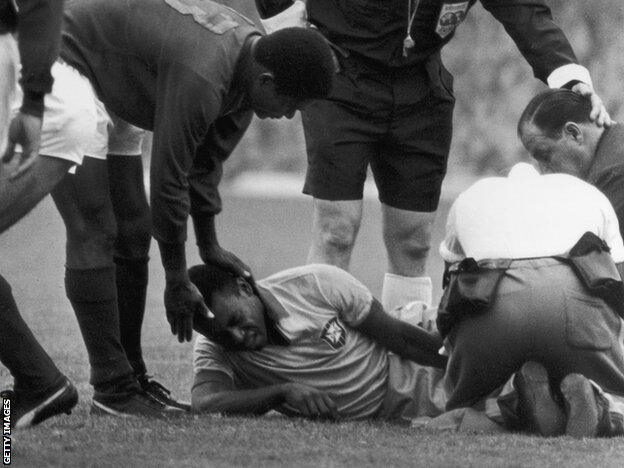
For sixty years, a red card in a football match meant a suspension for the next one. So when Folarin Balogun stepped on an opponent’s ankle against Bosnia and Herzegovina at the 2026 World Cup and was sent off, there was no appeal—red-card suspensions are automatic, not subject to review.

The Suspension of the Suspension
But the US president called the FIFA president to ask about the decision, and FIFA changed its decision: the US player’s red card will not cost him a match. The host nation’s striker in the knockout rounds, after a call from the host nation’s president, is free to play as someone above the law.
The red card was fair, by the way. But that is almost beside the point. Discipline in a global game cannot depend on who you are, where you play, or who speaks for you. And it shouldn’t change whether you call it Football or Soccer.

2 responses
The (Cristiano) “Ronaldo” rule definitely benefitted the U.S and Balogun, but we can’t act that Balogun was the first to benefit from postponing the suspension.
Yes, I understand, Hoss. Thanks for commenting. You’re right. It happened before, and it’s terrible either way. But the circumstances were different; one can argue that Qualifier matches and World Cup matches should not be treated as the same competition, and yet they are.
Here we have a player who received a red card in the same competition and remains eligible to play, while others were suspended in the tournament—this is simply scandalous.