Almost every Portuguese speaker knows (or should) the first line of a sonnet by Camões, the way almost every English speaker knows the first line of Hamlet’s soliloquy.
Everything flows
Luís Vaz de Camões (c. 1524–1580) is considered Portugal’s equivalent of Dante in Italy and Shakespeare in England. He authored Os Lusíadas, the epic in which Portugal told the world its own story through Vasco da Gama’s voyage to India. Camões has come to symbolize his nation, and Portuguese is even called the língua de Camões (the language of Camões) today.
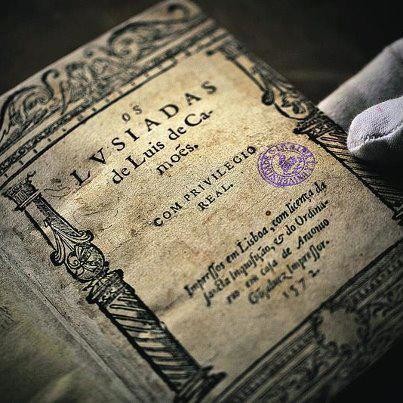
The mentioned sonnet begins like this:
Mudam-se os tempos, mudam-se as vontades,
muda-se o ser, muda-se a confiança;
todo o mundo é composto de mudança,
tomando sempre novas qualidades.Times change, and so do wills; being changes, and so does trust; the whole world is made of change, forever taking on new qualities.
For eleven of its fourteen lines, the sonnet draws on a tradition this blog frequently references. It includes Heraclitean philosophy, summarized as panta rhei, everything flows; the Preacher’s assertion in Ecclesiastes that there is nothing new under the sun; and Marcus Aurelius’s comforting reflection that nothing is closer to the heart of Nature than change, the very rhythm of life. The core idea is that change is a constant supported by the flow of existence, and wise people learn to accept it to live well.
How the sonnet ends
Then come the three lines that, as the Portuguese historian Rui Tavares notes in an article, are rarely quoted and even less often understood.
E, afora este mudar-se cada dia,
outra mudança faz de mor espanto:
que não se muda já como soía.And apart from this changing every day, another change is more astonishing still: that things no longer change as they used to.
Never quite like this
From his privileged point of view, Camões observes that change is no longer what it was: change has changed. Having lived through the era of the printing press, religious wars, and the discovery of a New World, with the Portuguese as active participants, he and his generation witnessed something unimaginable to the ancient authors the Renaissance revered.
We tend to forget that things always change, and that they have never changed quite like this, because what changes each time is the manner of change, and a new manner is, by definition, unexpected. Every generation that says “it was never like this” is, in that narrow sense, right—as Camões was right in the sixteenth century. The sentence is old, but the surprise is new every time.
The same joke, every time
My paternal grandfather could barely read or write, yet he knew things no one expected him to know. I can still hear one of his jokes that echoes our argument, making us laugh first and think afterward. Whenever someone brought news that an acquaintance had died, he would finish the thought, always the same way: “Absurd, isn’t it? These days, people who never died before are dying.”
Credits: Statue of Luís de Camões at Jardim Marquês de Pombal, Oeiras, Portugal. Cover photo by Pedro Ribeiro Simoes.

Leave a Reply